How to Monetize a Free Utility Website with Google AdSense
Turning your developer tools into a passive income stream. Tips on ad placement, content density, and navigating AdSense approval in 2026.
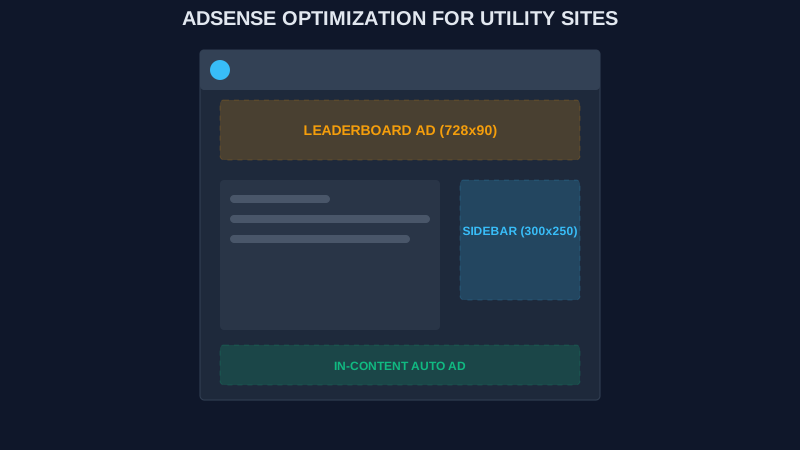
The Utility Site Challenge: High Traffic, Low Engagement?
Utility websites—tools like calculators, converters, and analyzers like ViewPageSource—are incredible for attracting high volumes of targeted traffic. Users have a specific problem, find your tool via a search engine, solve their problem, and leave.
This "hit and run" user behavior is great for traffic numbers but traditionally difficult for monetization. How do you convince a user to click an ad when they are hyper-focused on a technical task? And more importantly, how do you get Google AdSense to approve a site that is primarily "code" rather than "articles"?
In this guide, we'll walk through the exact strategy for monetizing a utility website in 2026.
1. The AdSense Approval Hurdle: Content is Still King
Google AdSense is notoriously difficult for utility sites to get approved for because of their "Low Value Content" policy. If your site only has a URL input box and a results table, you will likely be rejected.
The Solution: Surround your tool with high-quality SEO content. - Blog Integration: You need a blog (like this one!) with at least 20-30 high-quality articles (800-1,200 words each). This proves to Google that your site provides educational value beyond the tool itself. - Detailed Landing Pages: Every feature of your tool should have a dedicated page explaining *how* it works and *why* it matters. - E-E-A-T: Ensure you have a clear author bio, a contact page, and a detailed "About" page.
2. Strategic Ad Placements for Tools
On a utility site, the "Critical Path" is the user interface of the tool. You must place ads so they are visible but don't interfere with the tool's functionality.
Placement A: The "Pre-Result" Leaderboard
Below your main navigation but above the tool's header. This is high-visibility and gets a high Viewability score, which increases your CPM.
Placement B: The Sidebar "Related Insights"
While users are waiting for an analysis to run or reading results, their eyes often wander to the side. A 300x250 square ad here is highly effective.
Placement C: The "Middle of the Results" Ad
If your tool provides a long list of data (like a source code analysis), place an ad halfway down. This captures the user's attention as they scroll through the technical details.
3. Increasing Content Density for AdSense AI
AdSense's automated crawlers need text to understand what an ad should be about. If your page is 90% code snippets, the crawler might struggle.
- Dynamic Summaries: When a user runs an analysis on ViewPageSource, we don't just show the code. We show a text-based executive summary. "This site uses Next.js and has 5 security warnings." This text provides context for the AdSense crawler to serve relevant ads (e.g., ads for hosting or security software).
- Tool Descriptions: Always include a 200-300 word description of the tool's purpose at the bottom of the page.
4. Avoiding the "Accidental Click" Penalty
Google is very strict about ads being too close to buttons. If your "Analyze" button is right next to an ad, you will get "Invalid Click" penalties and potentially lose your account. Ensure at least 50px of breathing room between any interactive UI element and an ad unit.
5. Modern Alternatives: Beyond AdSense
While AdSense is the standard for beginners, as your utility site grows, consider these higher-paying alternatives:
- Ezoic or Mediavine: If you have over 50k sessions/month, these networks often pay 2x-3x more than standard AdSense by using AI to optimize ad placements.
- Affiliate Marketing: For a tool like ours, we could link to "Recommended Hosting" or "Best VPNs." One affiliate sale can equal the revenue of 1,000 ad clicks.
- Sponsorships: Once you become a "Topical Authority" in technical SEO, companies like Vercel or Cloudflare might be interested in a fixed-price sponsorship of a specific tool section.
Conclusion: Monetization is a Long Game
Don't rush into monetization. Focus on building a tool that people actually use and content that people actually read. Once you have a stable traffic base and satisfy Google's E-E-A-T requirements, the revenue will follow.
Ready to see how your site's tech stack looks to an ad crawler? Run a search on the ViewPageSource Home Page and start optimizing your technical foundation today.
About the Creator: Hassan
WordPress Developer | 2 Years Experience
Hassan is the lead developer and visionary behind ViewPageSource. As a Computer Science student and WordPress specialist with 2 years of experience in custom theme and plugin development, he built this tool to bring transparency to the web. Hassan focuses on creating high-performance, developer-centric applications that help others understand and audit the technology stacks behind their favorite websites.
Ready to optimize your site?
Use our professional tools to analyze your source code and technical SEO health in seconds.
Start for Free →